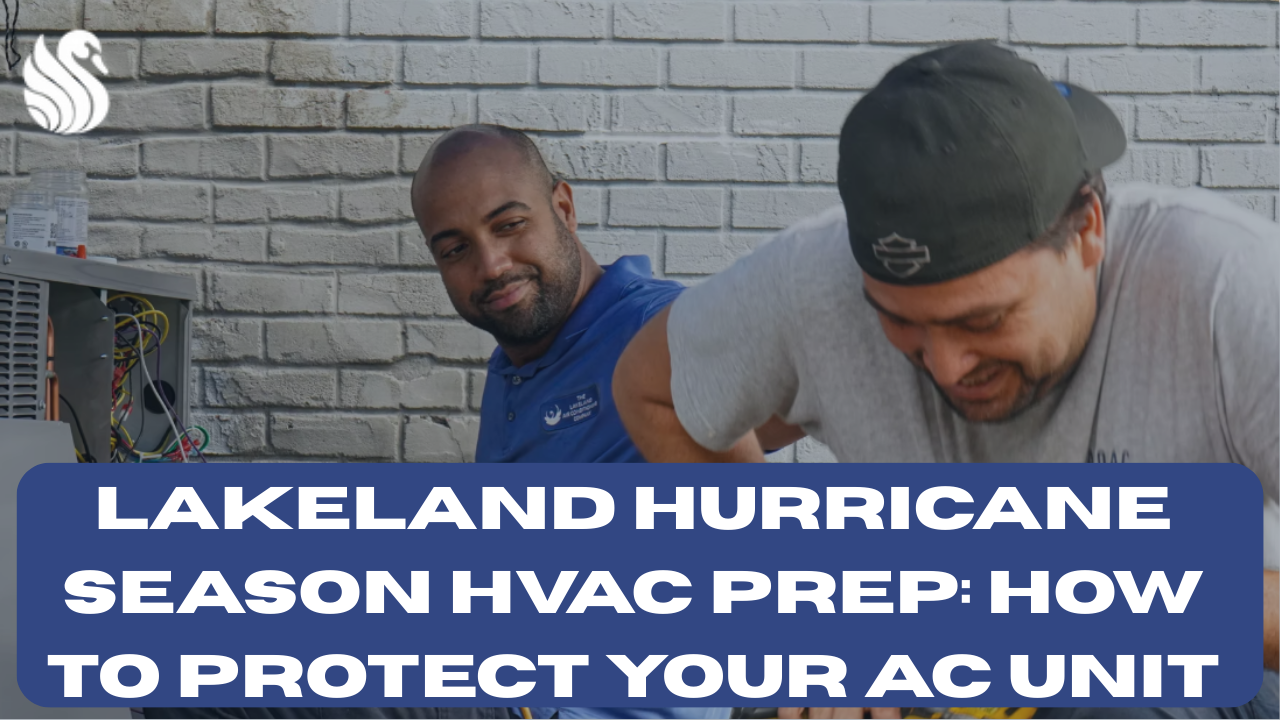
Hurricane season is a fact of life for Florida homeowners. While most people focus on windows, roofs, and generators, one major system is often overlooked until it’s too late: the air conditioner. If you’re searching how to protect your AC during a hurricane, you’re already taking the right first step.
In this Lakeland-specific guide, we’ll explain how hurricanes damage AC units, what to do before the storm hits, what to avoid, and how to safely get your system running again after the storm passes.
Why Hurricanes Are So Hard on AC Units in Florida
Your outdoor AC unit is exposed to everything a storm throws at your home.
Hurricane risks for HVAC systems:
- Flying debris
- Flooding and standing water
- Power surges
- Wind-driven rain
- Electrical damage
- Salt and moisture corrosion
In Polk County, even tropical storms can cause expensive HVAC damage if systems aren’t prepared properly.
Step 1: Turn Off Your AC Before the Storm
This is one of the most important steps.
Why you should shut it down:
- Prevents electrical damage from power surges
- Protects the compressor during outages
- Reduces risk when power cycles on/off
How to do it safely:
- Turn the thermostat to OFF
- Shut off the breaker to the AC system
This simple step can save thousands in repairs.
Step 2: Secure the Outdoor Unit (Do NOT Wrap It)
Many homeowners make this mistake.
❌ Don’t wrap your AC in plastic
Wrapping traps moisture and causes corrosion, mold, and electrical damage.
✅ What to do instead:
- Remove loose items nearby
- Clear yard debris
- Trim branches that could fall
- Place plywood around (not touching) the unit if needed for debris deflection
Airflow and drainage must remain unobstructed.
Step 3: Protect Against Flooding
Floodwater is one of the biggest AC killers during hurricanes.
If flooding is possible:
- Build a small barrier around the pad
- Ensure proper drainage away from the unit
- Never operate a unit that has been submerged
⚠️ If floodwater reaches electrical components, the system must be inspected before restarting.
Step 4: Prepare for Power Surges
Florida storms often cause power fluctuations long before full outages.
Helpful protections:
- Whole-home surge protection
- HVAC-specific surge protectors
These protect:
- Compressors
- Control boards
- Capacitors
- Thermostats
Step 5: What to Do Immediately After the Storm
Once the storm passes, resist the urge to turn everything back on immediately.
Post-storm checklist:
- Inspect the outdoor unit for damage
- Look for standing water
- Check for loose wires or debris
- Ensure vents and drains are clear
If anything looks off, don’t restart the system yet.
When NOT to Turn Your AC Back On
Do not restart your AC if:
- The unit was submerged
- Electrical components got wet
- Debris damaged the cabinet
- You hear unusual noises
- The breaker keeps tripping
Running a damaged system can turn a small issue into a full replacement.
Common Hurricane HVAC Mistakes Florida Homeowners Make
❌ Forgetting to shut the system down
❌ Wrapping the unit in plastic
❌ Restarting too soon
❌ Ignoring flood exposure
❌ Skipping post-storm inspection
Avoiding these mistakes can dramatically reduce repair costs.
How Annual Maintenance Helps With Hurricane Prep
Well-maintained systems are more resilient.
Maintenance ensures:
- Electrical connections are secure
- Drainage works properly
- Components are clean and protected
- Potential weaknesses are addressed early
Why Lakeland AC Company Is Ready After the Storm
As a family-owned Lakeland company serving Polk County since 2006, we’re here before and after storms.
We provide:
- Post-storm inspections
- Emergency repairs
- Honest assessments
- Fast response times
- Clear guidance on repair vs replacement
We live here too, and we understand Florida storms.